Try: "desk posture", "lifting mechanics", "breathing"

Self-paced learning

Workshop Library

All modules are self-directed and require no equipment. Explore by topic or start from the beginning.

Educational visual of abdominal muscle layers with anatomical overlay, clean neutral background Foundations
Module 01

Core Anatomy for Non-Specialists

An introduction to the muscles, fascia, and structures that make up the core system. Explains the roles of the transverse abdominis, multifidus, pelvic floor, and diaphragm without assuming prior anatomy knowledge.


Self-paced Foundational
Close-up of hands on ribcage demonstrating breathing awareness exercise, soft studio light Foundations
Module 02

The Diaphragm as a Core Muscle

Most core anatomy education overlooks the diaphragm. This module explains how the diaphragm contributes to spinal stability through intra-abdominal pressure regulation, and why breath mechanics matter for everyday movement.

Self-paced Foundational
Person at ergonomic desk setup, side profile showing neutral spine, home office environment Workplace
Module 03

Sitting Mechanics and Spinal Load

Examines what happens to the lumbar spine during prolonged sitting, how muscle activity patterns shift, and what types of positional variation affect spinal load distribution over time. Applicable to any desk or seated work context.

Self-paced Applied
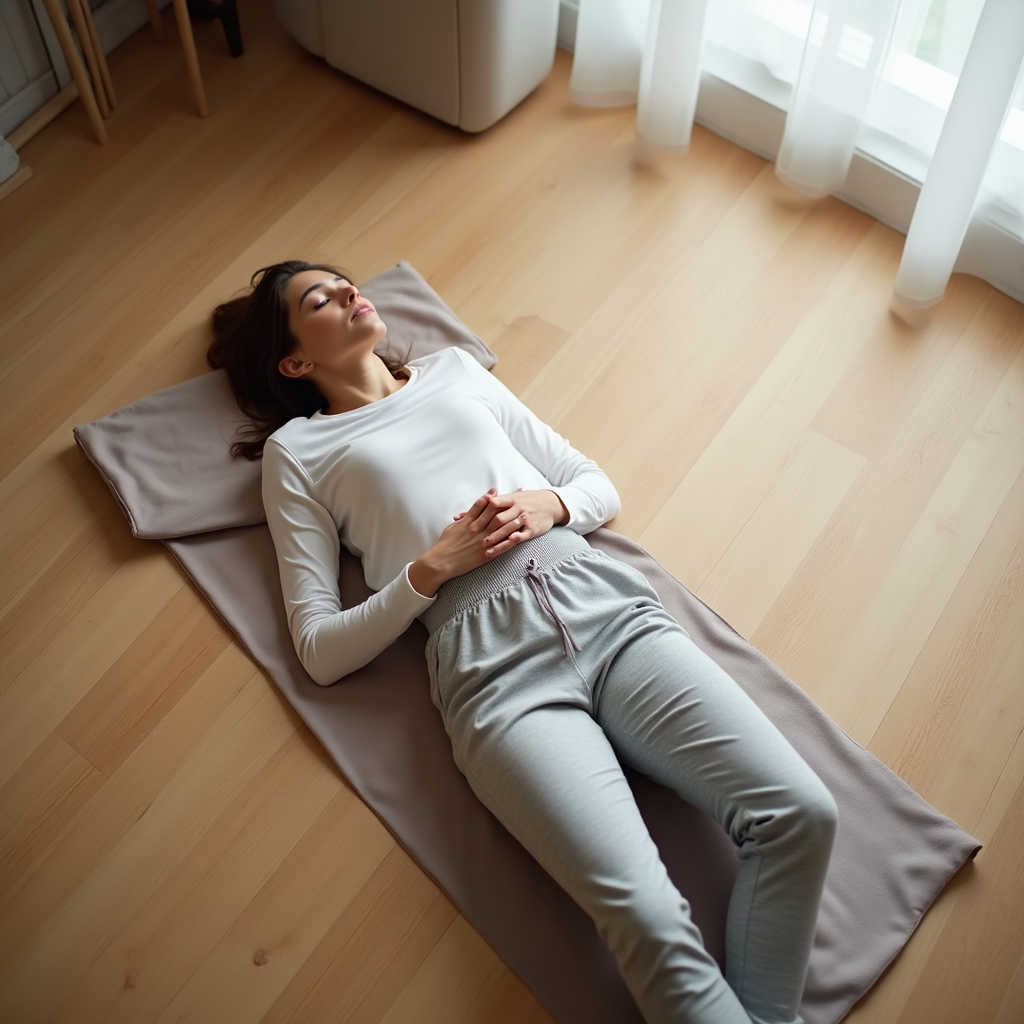
Woman lying on wooden floor in awareness exercise position, relaxed, soft natural light from side Daily Movement
Module 04

Floor-Based Awareness Practices

A series of guided movement awareness exercises performed lying down. These are not strengthening exercises. They are designed to help you notice how your pelvis, spine, and breath interact in a low-load environment.

Self-paced Practical
Man lifting a box from the floor showing neutral spine alignment, warm indoor light Daily Movement
Module 05

Lifting Mechanics in Daily Life

Covers the mechanical principles involved in lifting objects from the floor, a shelf, or a car trunk. Explains what the core is doing during each phase of a lift and how breath timing relates to load management.

Self-paced Applied
Person standing at kitchen counter, neutral spine from side view, warm domestic light Daily Movement
Module 06

Standing: Load, Variation, and Fatigue

Long periods of standing distribute load across the spine and lower limbs in ways that vary depending on posture and movement habits. This module examines those patterns and introduces the concept of positional variation as a practical tool.

Self-paced Applied
Person at desk with laptop in quiet reading nook, lamp light, calm productive atmosphere Breathing
Module 07

Breathing Patterns and Muscle Coordination

Different breathing strategies recruit different muscles. This module maps common breathing pattern variations to their effects on thoracic mobility, pelvic floor tension, and overall core coordination. Observable in everyday situations.

Self-paced Detailed
Person walking through hallway with canvas bag, confident posture, ambient light Workplace
Module 08

Transitions: Sitting, Standing, Moving

The moments between positions — getting up from a chair, reaching across a desk, turning while carrying something — involve more core coordination than the positions themselves. This module focuses on those transitions.

Self-paced Applied

A note on this content

All modules are educational in nature and are not intended as medical advice, diagnosis, or treatment guidance. If you are experiencing pain or physical symptoms, consult a qualified healthcare professional. This training is designed for general educational purposes.